
Nhung Nguyen Thi Thu
Viet Nam National Cancer Hospital, VietnamPresentation Title:
Prognostic factors influencing outcomes of glioblastoma treatment: Insights from real-world clinical practice
Abstract
Background: The current conventional treatment approach for newly diagnosed glioblastomas (GBMs) entails the complete removal of the tumor, followed by the implementation of Stupp’s procedure. The main purpose of this study was to analyze prognostic markers associated with survival, which could offer empirical evidence in the treatment of GBM.
Methods: A total of 64 patients diagnosed with newly developed GBM underwent treatment with irradiation and temozolomide (TMZ) at Vietnam National Cancer Hospital (VNCH) from January 2020 to September 2022. The study provided information on the demographic and clinical features of the patients, as well as their overall survival (OS) and progression-free survival (PFS) outcomes. The analysis of survival and related variables involved the utilization of Kaplan-Meier curves, Cox regression, and the log-rank test.
Results: The retrospective analysis comprised 64 participants. The vast majority of patients were in favorable performance status. The median OS and PFS were 21.91 and 9.39 months, respectively. Several factors, such as female patients, gross tumor resection/subtotal tumor resection (GTR/STR), time to start radiotherapy (RT) within 8 weeks postoperative, no progressive disease after concurrent chemoradiotherapy (CCRT), no dexamethasone required and Ki-67 level below 15%, were associated with increased OS. Regarding PFS, characteristics such as age <40 years old, GTR/STR and no disease progression following CCRT were substantially related to improved survival. Nearly half of patients received TMZ 50 mg/m2 in combination with bevacizumab following the initial progressive illness.
Conclusions: Multidisciplinary collaboration, as well as advancements in diagnosis and customized treatment strategies, are critical in the treatment of GBM patients. In actual life, completing the entire Stupp’s protocol significantly improves GBM survival.
Biography
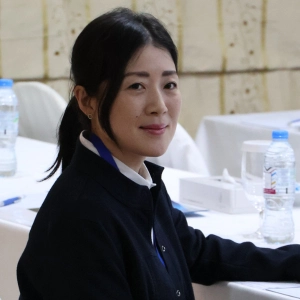
Nguyen Thi Thu Nhung, MD is a radiation oncologist at Viet Nam National Cancer Hospital (K Hospital), where she has worked for eight years and specialized for five years in pediatric radio-oncology, CNS tumors, and head and neck cancer treatment. She has hands-on experience with advanced techniques such as VMAT, IMRT, and pediatric anesthesia for radiation therapy and is preparing to implement SBRT and IMPT in the near future. Dr. Nhung has published multiple peer-reviewed papers on nasopharyngeal carcinoma, thyroid cancer, glioblastoma, and pediatric CNS germ cell tumors. Her current research focuses on optimizing and improving multimodality treatment strategies for CNS, pediatric cancer such as sarcoma, lymphoma and head & neck cancers. She is passionate about enhancing the quality of patient care and advancing pediatric radiation oncology practice in Vietnam through international collaboration and evidence-based treatment.